What Bought the No

You cannot say no to anyone until you have somewhere else to go.
That is why bad advice sticks to people in their first year of anything, and it took me most of two to see it.
Before there was anything
The pattern started before the company did. In late 2022 I was two hundred and nine pounds. It took three years to undo, nobody clapped for the middle of it, and the middle is the only part that mattered.
In 2024 I got put in a room with people operating at a level I had never seen up close. It rearranged how I understood almost everything, including how little I knew about rooms I was already standing in, and the ones I was about to walk into later that year.
The failure was the same everywhere I looked. No framework of my own, so I borrowed everyone else's.
That summer I named this company alone in a car on a coastal road between two beach towns, before there was anything to name. There was no one in the passenger seat to agree with it.
Why the wrong people got in
I left fourteen years of corporate America in September 2024. Two months later, at thirty-six, I moved into a place of my own. For most of that first year, anyone with a title or a long history with me could get a meeting, an opinion into my head, and a week of my time.
When you have nothing to show yet, you have no filter either, so credentials fill the gap. A title reads as authority. A referral reads as vetting. None of that is judgment. It is a placeholder standing in until you build the real thing.
Moving before the proof
None of what came next arrived on its own. I kept taking bigger risks with less cover than the time before, and most of those were taken while the noise was at its loudest.
There is a stretch where you have nothing to point to yet and you are already moving past people who expected you to stay where you were. The response to that is rarely neutral. Some of it got ugly.
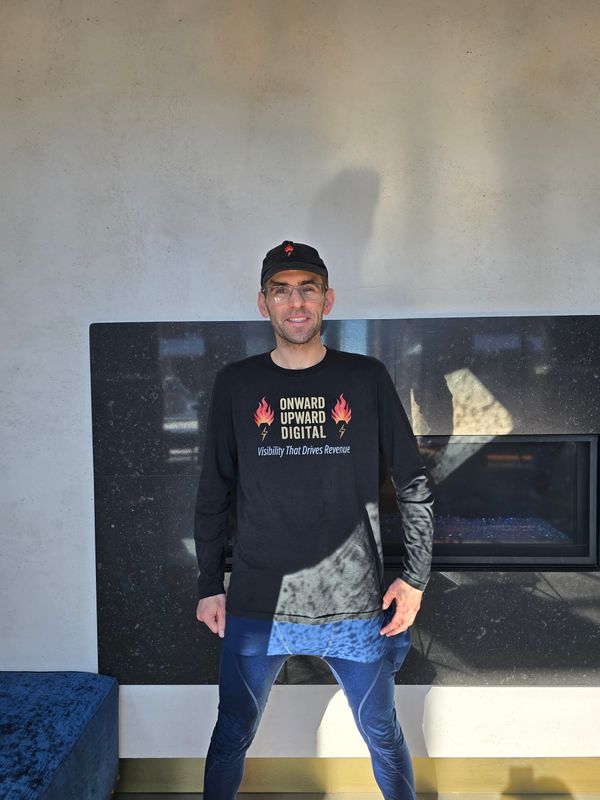
By November 2025 I was one hundred and sixty-five pounds. Three years of it, and the only part anybody saw was the end.
What I worked out somewhere in there is that being disliked was not information. It said something about the distance, and nothing about whether the decision was right.
People do not update
Most relationships run on a snapshot. Whoever you were the last time someone assessed you is who you remain in their head, and then the terms change without either side announcing it. Some people manage that and some cannot. Nobody ever acknowledges it either, and the ones best positioned to are the least likely to.
A deck full of people who had known me for years went quiet last month, hearing what the last two had produced. I had not said a word about any of it. Someone else did.
Then I was in a bar the other night where the bartender told me he did not recognize me. I had seen him six months ago. I explained myself anyway, which is what you do when you spend enough time somewhere to know the staff. He was working. He did not care, and he was not supposed to.
The proof is what you can do now, not who recognizes you doing it.
Better rooms, and what they are for
For a long time my world was individuals doing individual favors. Now it is rooms with standards, where you apply, someone inside vouches for you, and your place goes away if you stop showing up.
Four days after I was let into one, somebody handed me an introduction I would have spent a long time earning on my own. Unprompted, same afternoon, no favor owed.
Last week somebody in that same world turned out to be connected to that short but life-changing stretch in early 2024, before any of this existed. I did not go looking for it and I could not have engineered it. Lines from back then come back around when you end up somewhere worth coming back to.
Compounding does not look like more contacts. It looks like better-positioned ones.
Someone I know started his first company a few weeks ago and sent me something nobody had asked him for. It was better than it needed to be, and nobody had told him to do it. I know exactly what it costs to do that with no idea whether the other side will meet you halfway. Don't treat the founder like shit or harass them for making money their way.
So anyone starting out around me gets clear terms and room to grow into them. People given a fair shot early remember who gave it to them. The one condition is that value moves both directions, or it ends quietly and without a second attempt. That holds across every lane I operate in.
Who gets that chance is mine to decide now. That is what the leverage is for, and spending it on old scores would be a waste of it.
What I got wrong about the system
Everything I was taught assumed the old system was fixed and the only question was whether I could win inside it. Learn the rules faster. Find the edge. Get past the people who were already there.
That was wrong, and I did not find it out on purpose.
I built a different arrangement because the existing one did not fit what I was doing. No capital to tie up, so nothing gets bought. No history to trade on, so nothing rides on who owes whom. Every constraint turned into a rule, and the rules turned into a way of operating that had no name and was never meant to become one.
Two years in, it is the thing other people and organizations are asking to be part of. That is the part I never planned for.
Who joins and who does not
The adoption pattern surprised me more than the adoption did, and the last two months made it obvious.
Larger organizations move first. The return shows up faster there than anywhere else.
The ones who do not join are easier to spot than I expected. They are the people who have to be right always. Ego. Not right about the work, right in the argument, which is a different thing and costs far more than it looks like it will. Costs you time, frustration, but only if you give it any attention. Truth is, it deserves zero attention.
I spent years managing around that. I do not anymore. Somebody stalled on something straightforward a few weeks ago and I said so plainly, without dressing it up, and it moved the same afternoon. The old version of me would have waited a week and called that patience. Accountability, one of the Onward Upward core values.
The tell is who benefits from nothing changing. Once that is visible the reaction stops being confusing, and it stops being worth much attention.
What it is for
I did not build this to have a business. I built it because the life I'm at now has a cost, and I would rather this carry that cost than a job, at least at the beginning. Time that belongs to me, travel that does not require permission, and a partner and eventually a family who get the version of me that is present rather than used up.
One other thing moved in these two years that has nothing to do with any of the above. A relationship I assumed would stay hard got easier, because the wall I kept walking into turned out to be one I built. I lost years to an assumption I never tested, and that correction is worth more to me than anything I closed.
Freedom is the product. The rest of it funds that.
What is next
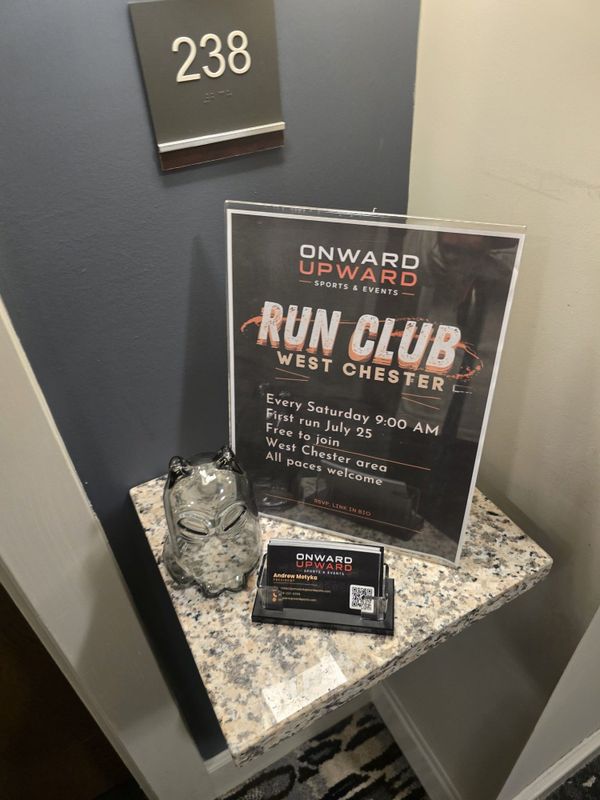
Live entertainment also happens to be one of our service lines without me ever planning it. It also runs in my family. The best parts of this have mostly arrived that way. Same thing with the sports industry as well.
Deeper, not wider. Fewer things done better, and people running the parts that were never mine to run.
Two years ago I was proving it was possible.
Now I am building something that can say no without me in the room.
Andrew Motyka, President Onward Upward Sports and Events